

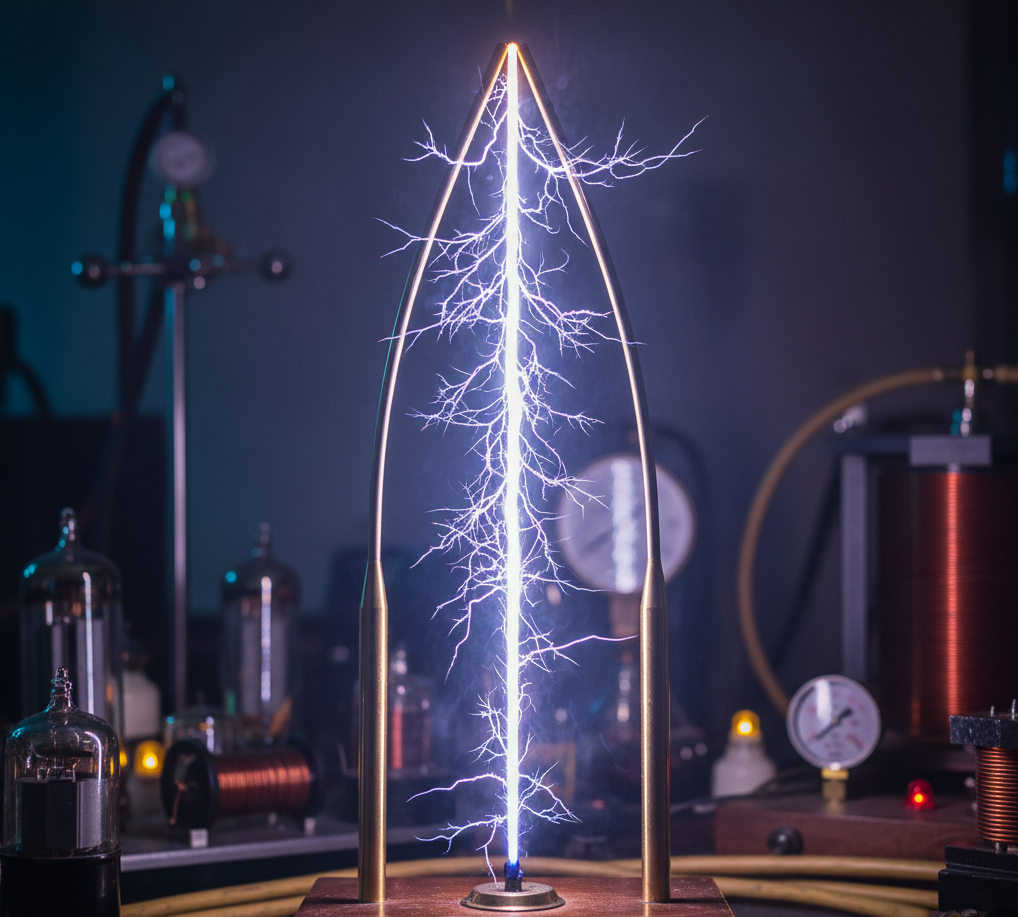
Jacobs Ladder Machine
If you’ve ever seen two metal rods with a flickering arc of electricity climbing upward between them, you’ve already witnessed something fascinating the Jacob’s Ladder Machine. Often found in science museums, movie scenes, and tech labs, this device isn’t just visually mesmerizing; it’s a simple yet powerful demonstration of how electricity and physics work together.
In this article, we’ll break down what a Jacob’s Ladder Machine is, how it works, and why it continues to amaze scientists, students, and technology enthusiasts around the world.
What Is a Jacob’s Ladder Machine?
A Jacob’s Ladder Machine, also known as a climbing electric arc, is a high-voltage electrical display device that demonstrates the behavior of ionized air and electric discharge.
It typically consists of:
- Two vertical metal rods placed close together at the bottom and slightly apart at the top
- A high-voltage power source (like a transformer) connected to the rods
When the machine is turned on, a bright blue or purple electric arc forms at the bottom and slowly “climbs” upward between the rods until it disappears and then the process repeats.
This climbing arc gives the Jacob’s Ladder its iconic “ladder” name, and visually, it’s like watching electricity dance its way into the air.
The Science Behind the Climbing Electric Arc
So, what makes the arc climb? The secret lies in plasma physics and heat transfer.
When the high voltage is applied, the air between the two metal rods becomes ionized meaning electrons and ions are separated, creating a plasma channel that allows current to flow.
Here’s what happens step-by-step:
- Ionization begins at the narrowest point (bottom of the rods).
- The electric arc forms there because the voltage is strong enough to break down air resistance.
- The arc heats the air around it, and hot air rises (a basic physics principle).
- As the hot plasma rises, it carries the arc upward along the diverging rods.
- Eventually, the gap between the rods becomes too wide, breaking the connection the arc disappears.
- The air cools, and a new arc forms at the bottom, starting the process again.
This repeating cycle creates the illusion of a continuously climbing spark a brilliant visual demonstration of electricity in motion.
Why Is It Called “Jacob’s Ladder”?
The name “Jacob’s Ladder” comes from the Biblical story of Jacob’s dream, where he saw a ladder stretching from Earth to Heaven with angels ascending and descending on it.
In the same way, the electric arc in the Jacob’s Ladder Machine climbs upward, symbolizing that ladder-like motion making it both poetic and scientific.
4. Components of a Jacob’s Ladder Machine
To better understand how it works, let’s look at its main parts:
- Electrodes (Metal Rods): Usually made of copper or steel, positioned in a “V” shape.
- Transformer: Converts low-voltage AC current into high-voltage output (commonly 10,000V to 15,000V).
- Power Supply: Provides the energy to the transformer.
- Insulating Base: Prevents electrical grounding or short circuits.
- Air (Medium): Acts as the dielectric medium that becomes ionized during operation.
Each of these components plays a vital role in ensuring the arc behaves consistently and climbs smoothly without interruption.
The Physics in Detail
The Jacob’s Ladder Machine is a classic example of several scientific principles at work simultaneously:
- Ionization: Air molecules break down into ions and electrons when exposed to a strong electric field.
- Thermal Convection: The hot plasma created by the arc is lighter than the surrounding air, so it rises.
- Voltage Gradient: As the rods separate, voltage required for the arc to continue increases until it breaks off.
This interplay between heat, plasma, and voltage makes the Jacob’s Ladder a living demonstration of electromagnetism and thermodynamics in one setup.
Educational and Practical Uses
Though it looks like a simple science experiment, the Jacob’s Ladder Machine has valuable uses:
- Physics Demonstrations: It helps students visualize plasma, ionization, and electric discharge phenomena.
- High-Voltage Training: Engineers use it to understand insulation and breakdown voltage.
- Entertainment & Movies: Jacob’s Ladder often appears in sci-fi films and haunted labs to create a dramatic “mad scientist” effect.
- Art & Exhibitions: Makers and artists use it as an interactive visual piece in tech displays or museums.
Safety Considerations
While it’s fascinating, the Jacob’s Ladder Machine isn’t a toy. It operates at extremely high voltages that can be dangerous or even fatal if handled incorrectly.
Here are key safety points:
- Never touch the rods or arc while it’s on.
- Use a properly insulated enclosure or glass shield.
- Keep it away from flammable materials.
- Ensure good ventilation to prevent ozone buildup.
- Always disconnect power before making adjustments.
If you’re a hobbyist, always follow safety guides and use protective equipment when experimenting.
Modern Innovations
Today, engineers and hobbyists have reinvented the Jacob’s Ladder Machine using modern electronics. Some new variations include:
- Solid-State Power Supplies: Safer, more efficient power control.
- Microcontroller Integration: Automated control of voltage and timing.
- LED Simulations: Visual replicas using LEDs to simulate the climbing arc safely.
- Educational Kits: Miniature Jacob’s Ladder sets for classroom demonstrations.
These innovations make the device both safer and more educational, keeping its spark alive in the modern age.
Why the Jacob’s Ladder Still Fascinates Us
There’s something magical about watching raw electricity move and the Jacob’s Ladder Machine captures that perfectly.
It symbolizes the power of science made visible where invisible forces like voltage, heat, and plasma become a glowing, dancing arc right before our eyes.
From early physics labs to today’s classrooms and tech museums, this device reminds us how simple ideas can lead to powerful scientific insights.
Conclusion
The Jacob’s Ladder Machine is more than just a cool electric display it’s a brilliant example of physics in action. It visually represents the principles of ionization, heat convection, and voltage, all working together to produce a mesmerizing climbing spark.
Whether you’re a student, hobbyist, or tech enthusiast, understanding how this machine works deepens your appreciation for the incredible power of electricity.
So the next time you see that glowing arc climbing higher and higher, remember behind that beautiful light show lies the genius of science, engineering, and curiosity combined.
Learn more about fascinating science and technology topics like this on Deduck.online.